A chicken that stops eating or drinking needs prompt observation because appetite loss is a symptom, not a diagnosis. First confirm that she truly is not consuming food or water, separate her in a calm hospital pen where intake can be measured, and look for breathing difficulty, injury, crop trouble, egg-related illness, abnormal droppings, heat or cold stress, and flock-wide disease signs. A weak or poorly responsive chicken should not be force-fed or have water poured or syringed into her mouth; incorrect oral feeding can send material into the airway.
This guide helps backyard keepers organize observations and supportive care while contacting a poultry-experienced veterinarian. It does not diagnose the cause or replace veterinary treatment. Use our Chicken First Aid emergency guide when a bird is collapsed, bleeding heavily, severely injured, having seizures, or struggling to breathe.
When Not Eating or Drinking Is an Emergency
Do not wait for a chicken to become visibly thin. Chickens can conceal illness, and a change in food or water use may be one of the first signs that something is wrong. Water access is especially urgent because chickens need water for digestion and will reduce or stop eating when they cannot drink.
- Open-mouth breathing at rest, gasping, marked tail bobbing, or blue-purple color
- Collapse, inability to stand, profound weakness, seizures, or loss of balance
- Repeated straining, penguin-like posture, a swollen abdomen, or concern for an egg-related emergency
- A crop that remains enlarged before breakfast, especially with regurgitation, foul odor, or breathing change
- Repeated vomiting or regurgitation, choking, inability to swallow, or material coming from the nostrils
- Blood in droppings, black tarry droppings, severe watery diarrhea, or no droppings despite repeated attempts to pass them
- Rapid weight loss, a sharply prominent keel, severe dehydration, or a bird that is becoming less responsive
- Sudden appetite loss in several birds, unexpected deaths, respiratory or neurologic signs, facial swelling, or a sharp drop in egg production
The USDA lists lack of appetite among important poultry illness signs and advises reporting sudden or significant flock changes. In the United States, unexplained sick or dying poultry can be reported to a state veterinarian or USDA at 1-866-536-7593. Contact a veterinarian immediately for an individual emergency; use official disease-reporting channels when the pattern could involve a reportable flock disease.
First Confirm What the Chicken Is Actually Consuming
A flock feeder does not show what one hen has eaten. A low-ranking bird may visit the feeder but be displaced, peck at treats while avoiding complete feed, or drink only when you are not watching. Conversely, wet feed, spilled water, rodents, wild birds, or flockmates can make communal levels misleading.
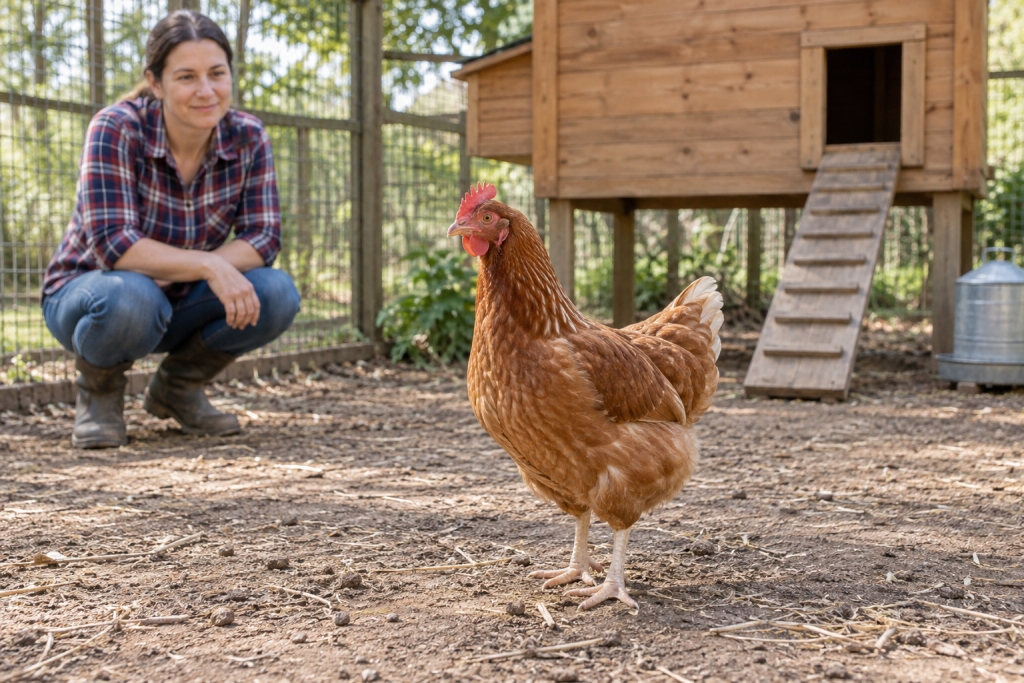
- Watch quietly from a distance before catching her. Note whether she approaches food and water, picks up feed, swallows, and returns to normal activity.
- Place a measured amount of her familiar complete feed and fresh water in separate, stable containers.
- Photograph or mark the starting levels and recheck them at consistent times. Account for spills and evaporation.
- Observe droppings on clean paper or a light-colored liner. Reduced intake often produces fewer, smaller, or greener droppings, but appearance alone does not identify the cause.
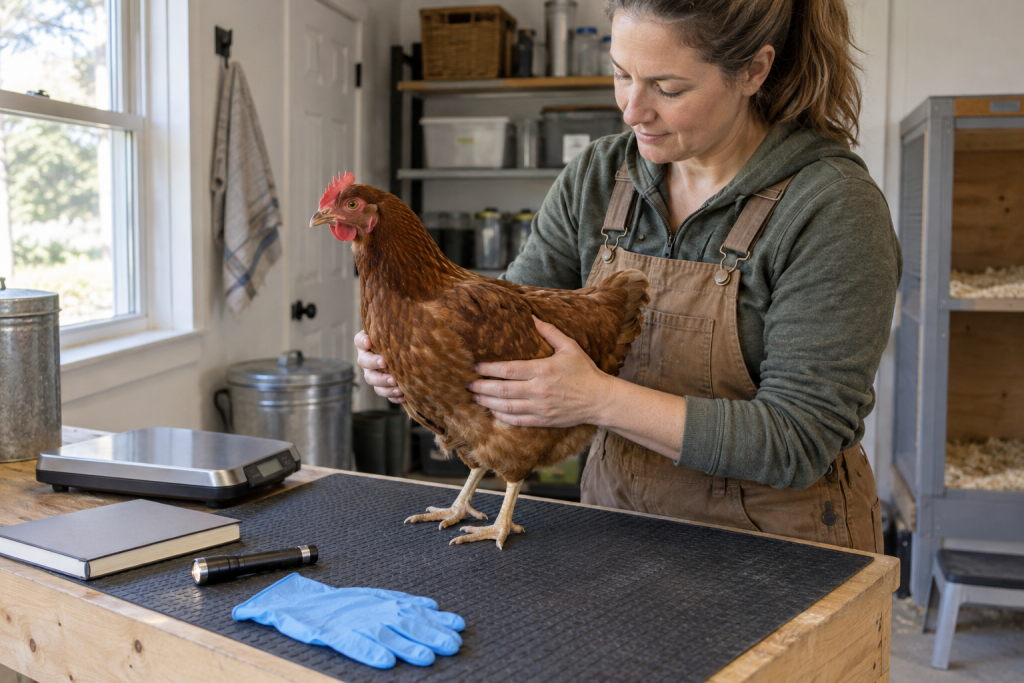
- Record body weight on the same scale at a similar time each day. A trend is more useful than one number.

University of Minnesota Extension recommends continual access to clean, fresh water and learning each bird’s normal eating habits. Our guide to healthy and abnormal chicken droppings can help you describe changes without treating droppings as a stand-alone diagnosis.
Set Up a Quiet Hospital Pen
Move the chicken to a secure, well-ventilated isolation space where she can rest and where you can measure intake and droppings accurately. Keep familiar complete feed and clean water within easy reach at floor level. Use stable, shallow poultry-safe containers that will not tip or require a weak bird to stretch. Keep the surface dry and nonslip, reduce noise and handling, and prevent pets or flockmates from crowding the pen.
Match the temperature to the bird’s condition. A chilled, fluffed bird may benefit from a comfortably warm environment with room to move away from the heat, but a panting or heat-stressed chicken needs controlled cooling, airflow, and shade—not more warmth. See the complete sick-chicken hospital pen setup, plus our seasonal guides to heat stress in chickens and cold stress in chickens.

Check Simple Access and Environment Problems First
Before assuming disease, verify that food and water are available, familiar, clean, and physically accessible. Correcting an access problem does not rule out illness, but it can remove an avoidable barrier while you continue the assessment.
- Empty, frozen, overheated, or contaminated water: test every nipple or valve and inspect open drinkers for algae, litter, droppings, ice, or heat.
- Recent equipment change: make sure the bird understands a new drinker or feeder and can reach it comfortably.
- Bullying or crowding: watch for a dominant bird guarding resources; provide multiple widely separated stations.
- Feed problem: check the date, odor, texture, moisture, mold, insects, and whether the ration or pellet size changed suddenly.
- Extreme weather: heat commonly suppresses feed intake, while frozen water can lead quickly to reduced eating in cold weather.
- Stress: transport, predator pressure, flock integration, a coop change, or recent handling can reduce normal behavior, but persistent appetite loss still deserves investigation.
Offer the same nutritionally complete feed the chicken normally eats rather than trying a parade of treats. A few favorite foods may confirm interest, but a bird living on scratch or mealworms can appear to “eat” while missing the balanced ration she needs.
Perform a Brief Head-to-Toe Check
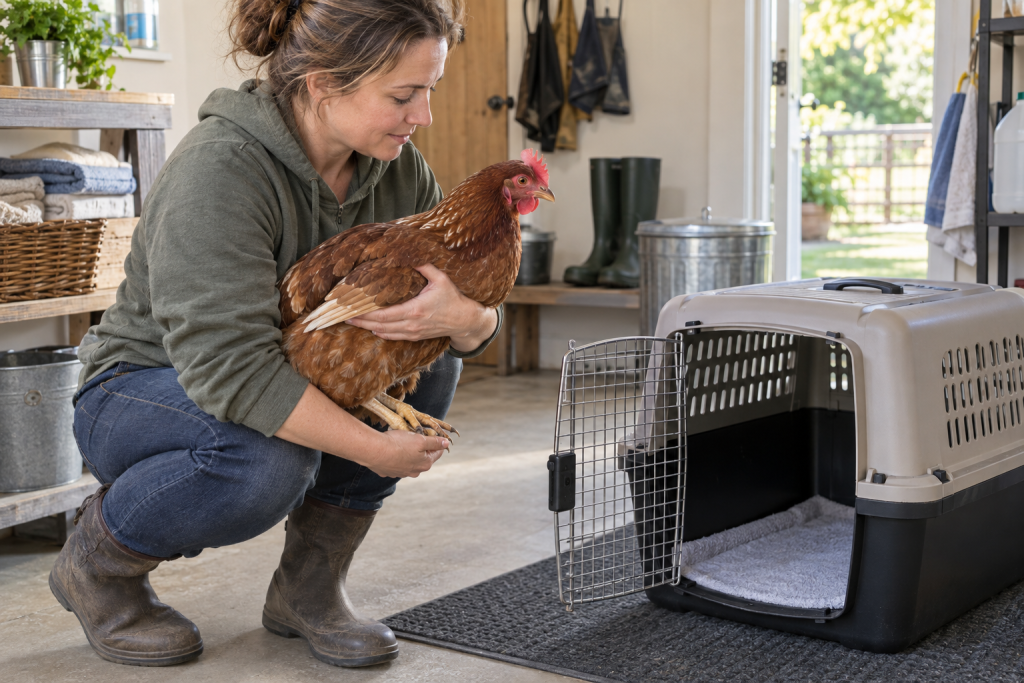
Observe before handling, then work in a consistent order. If restraint causes open-mouth breathing, weakness, or escalating panic, stop and place the chicken upright in a secure carrier or hospital pen. The full head-to-toe chicken health-check guide explains each step, and the safe catch, restraint, and transport guide shows how to support the body without compressing the chest.
- Behavior and breathing: alertness, posture, balance, respiratory effort, nasal discharge, sneezing, coughing, or facial swelling
- Weight and body condition: daily weight trend and breast muscle on both sides of the keel
- Eyes, nostrils, beak, and mouth: swelling, discharge, plaques, injury, foreign material, an overgrown beak, or difficulty picking up and swallowing feed
- Crop: size and feel compared with a healthy flockmate, especially first thing in the morning before breakfast
- Abdomen and vent: distention, repeated straining, prolapse, pasted feathers, diarrhea, parasites, or discharge
- Legs and feet: heat, swelling, wounds, bumblefoot, weakness, or pain that prevents the bird from reaching resources
- Skin and feathers: hidden wounds, mites, lice, feather damage, or evidence of flock attack

The crop normally fills during the day and should be much less noticeable before the bird eats the next morning. A persistently enlarged crop deserves veterinary advice. The University of Maryland Extension recommends checking for crop problems before morning feeding and warns that aggressive manipulation of a fluid-filled crop can cause aspiration. Do not tip a chicken upside down or attempt to make her vomit.
Common Reasons a Chicken Stops Eating or Drinking
The same outward sign can have very different causes. Use the categories below to organize information for a veterinarian—not to choose a medication blindly.
Pain, Injury, or Trouble Reaching Resources
A wound, fracture, bumblefoot, sprain, attack, or severe feather damage may make movement and feeding painful. Keep food and water close, but do not assume that moving them solves the underlying injury. Limping and mobility problems are covered in the next cluster guide, Why Is My Chicken Limping?
Respiratory or Mouth Problems
Respiratory disease can reduce appetite and may make swallowing or breathing harder. Mouth lesions, foreign material, beak damage, facial swelling, and eye problems can also interfere with finding or taking feed. Isolate the bird, minimize handling, and review respiratory illness warning signs. Multiple affected birds or sudden severe signs increase the need for veterinary and official disease-reporting guidance.
Crop or Digestive-Tract Trouble
Crop impaction, delayed emptying, sour crop, obstruction, parasites, intestinal disease, or spoiled feed may be involved. Crop feel, morning emptying, droppings, weight, odor, regurgitation, and flock history help a veterinarian distinguish possibilities. Avoid unmeasured copper products, oils, laxatives, dewormers, antibiotics, or home remedies; the wrong treatment can delay diagnosis, be toxic, or create egg and meat withdrawal concerns.
Reproductive Illness
Egg binding, salpingitis, internal laying, reproductive masses, or prolapse can cause appetite loss, straining, abdominal enlargement, reduced droppings, and a tucked or upright posture. These signs overlap with other diseases, so repeated soaking, squeezing, or attempting to remove an egg can injure the hen. See egg-binding signs and safe next steps and arrange veterinary care for a distressed hen.
Systemic or Flock Disease
Infections, heavy parasite burdens, toxin exposure, liver or kidney disease, neurologic disease, and reportable poultry diseases can all reduce intake. When more than one bird is affected, strengthen separation and sanitation, stop moving birds or equipment between flocks, and follow your backyard-flock biosecurity plan while seeking professional guidance.
Safe Supportive Steps While You Arrange Care
- Keep the chicken upright, quiet, and protected. Use a secure hospital pen with appropriate temperature and ventilation.
- Provide clean water within easy reach. Use a stable container the bird already understands. Offer it; do not pour it into her beak.
- Offer familiar complete feed. Place a small measured amount close to the bird and keep it dry and fresh.
- Remove social competition. Make sure she can approach both dishes without being pecked or displaced.
- Track objective changes. Record weight, measured intake, droppings, posture, breathing, egg history, and photographs.
- Call a poultry-experienced veterinarian. Describe duration, progression, flock exposure, feed changes, recent weather, medications, and whether other birds are affected.

A Sav-A-Chick electrolyte and probiotic combo pack can be useful to keep on hand for situations covered by its label, including heat or transport stress. It is not a treatment for an unknown illness and it does not make force-watering safe. Mix only as directed, use clean equipment, and keep plain water available unless the product label or veterinarian says otherwise. The My Favorite Chicken 15-piece poultry first aid kit keeps basic observation and response supplies organized, but serious appetite loss still requires diagnosis.

Do Not Force-Feed or Force Water
Do not pour water down the throat, squirt liquid toward the back of the mouth, tube-feed, or pack food into the beak of a weak chicken. Birds have an airway opening at the base of the tongue, and poor technique can cause aspiration, crop injury, stress, or death. A veterinarian may prescribe fluids or assisted feeding after assessing hydration, body temperature, crop function, obstruction risk, and the underlying disease. Those are trained procedures, not generic first aid.
The Merck Veterinary Manual notes that hydration and normal body temperature should be established before veterinary crop feeding and describes fluid administration and assisted nutrition as clinical procedures. If your veterinarian instructs you to give an oral product, ask for a demonstration, an exact dose, the correct route, and clear stop signs.
What to Record for the Veterinarian
- When you first noticed reduced food or water intake and whether it is worsening
- Exact daily weights and the time each was taken
- Measured food and water offered, remaining, and spilled
- Photographs of droppings and the hospital-pen setup
- Video of breathing, posture, gait, or unusual behavior before handling
- Crop size and feel at bedtime and before morning feeding
- Last known egg, changes in shell quality, straining, or abdominal enlargement
- Feed brand and lot, new treats, supplements, medications, pesticides, or possible toxins
- Recent additions, shows, wildlife exposure, travel, predator events, and weather extremes
- Whether any other birds have similar signs or whether deaths have occurred
Bring the chicken in a secure, ventilated carrier with a nonslip absorbent liner. Keep the carrier level and climate controlled, and bring labeled photos, records, product packages, and a fresh dropping sample only if the clinic requests one.

Frequently Asked Questions
How long can a chicken go without eating or drinking?
Do not use a fixed survival estimate as a reason to wait. Temperature, age, body condition, egg production, disease, and prior intake all change the risk. A chicken that is not drinking, is weak, or is showing another red flag should receive same-day veterinary guidance.
Should I offer treats to make a sick chicken eat?
A small amount of a familiar favorite may show whether she is interested in food, but treats do not replace a complete ration and can obscure the intake record. Do not keep changing foods when the chicken needs a diagnosis.
Should I massage a full crop?
Not aggressively. A crop that remains full before breakfast needs careful evaluation, and forceful manipulation of a fluid-filled crop can cause regurgitation and aspiration. Keep the bird upright and contact a veterinarian rather than tipping her or trying to empty the crop yourself.
Can I add electrolytes, vitamins, antibiotics, or dewormer to the water?
Use a poultry electrolyte only for an appropriate labeled situation and mix it exactly as directed. Do not add antibiotics, dewormers, copper products, or other medications without a diagnosis and exact instructions. A sick bird may drink unpredictably, making water medication unreliable, and every drug has species, dose, interaction, and withdrawal considerations.
When can the chicken return to the flock?
Wait until the cause is understood, contagious-disease concerns are resolved, the chicken is eating and drinking normally, droppings and activity are stable, and she can compete safely. Follow the veterinarian’s isolation period and reintroduce gradually; do not return a weak bird simply because she ate once.
Bottom line: verify the change, isolate safely, measure what the bird actually consumes, observe the whole chicken, and involve a veterinarian early. Calm supportive care buys time for diagnosis; force-feeding, random medication, and repeated home remedies can take it away.