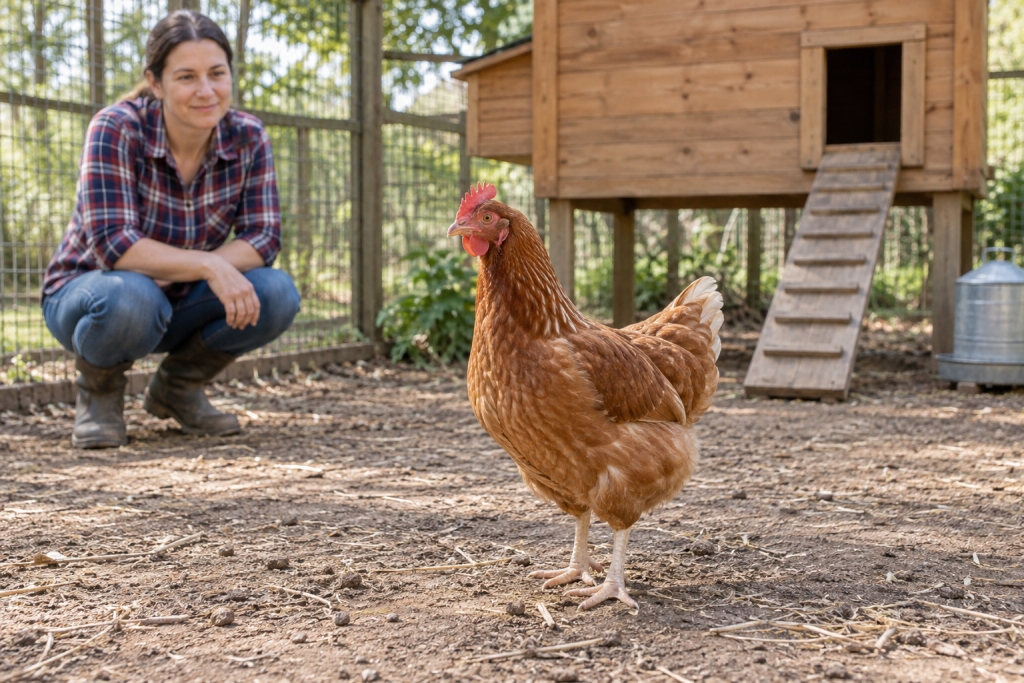
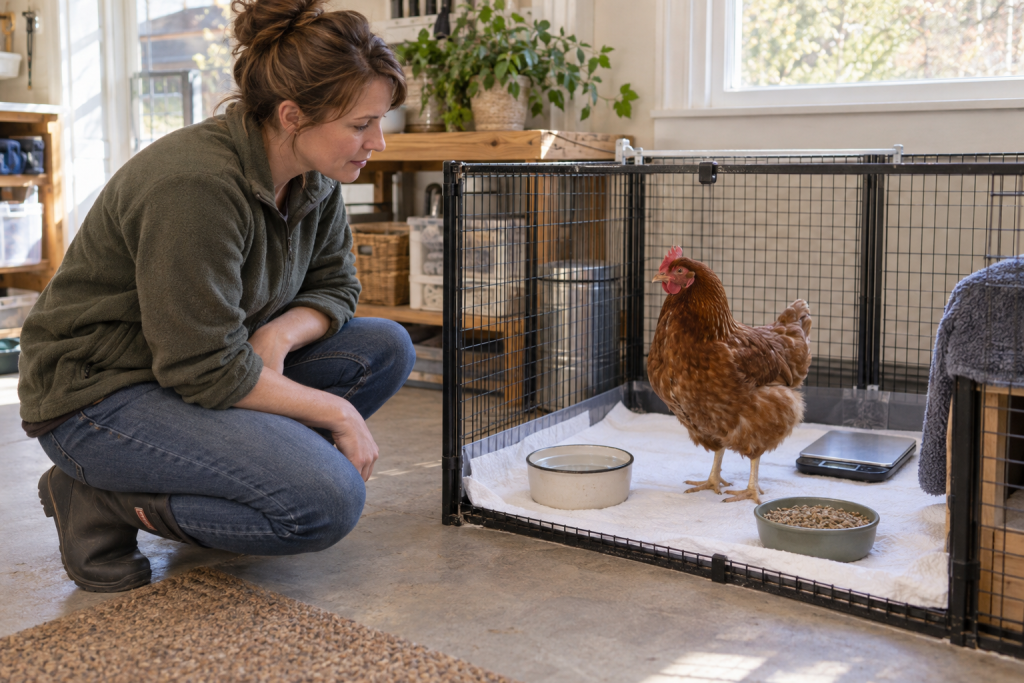
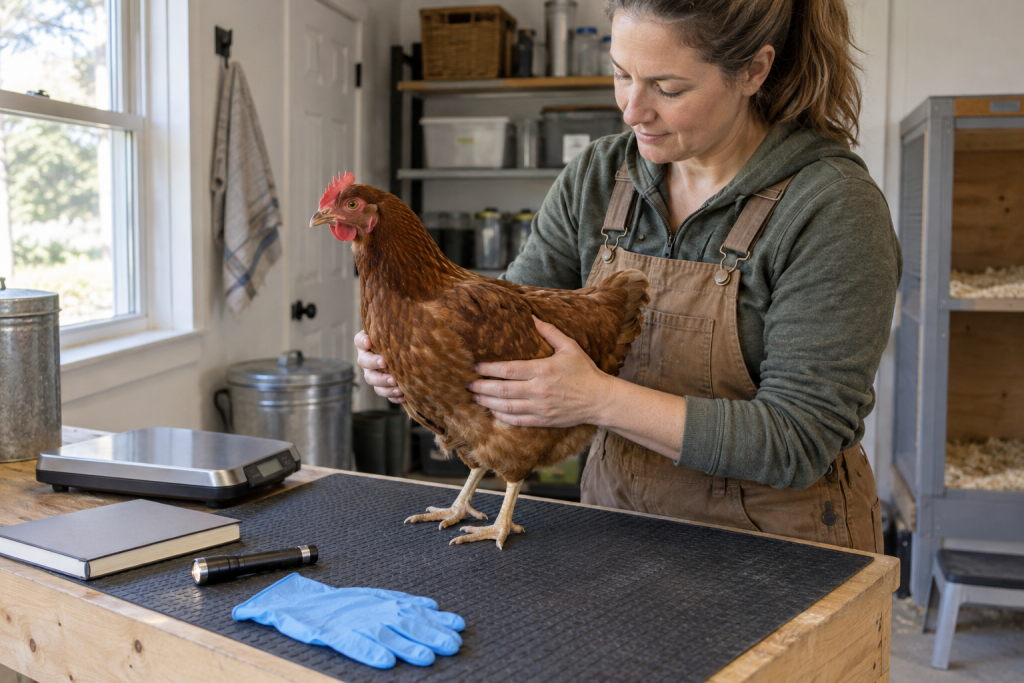
To catch, restrain, and transport an injured chicken safely, prepare the carrier first, reduce the space and light, approach slowly, contain both wings, support the body and feet, and keep the bird upright without squeezing the chest. Move directly into a stable ventilated carrier, minimize handling, and monitor breathing and alertness throughout the trip.
In an emergency, the goal is not a perfect examination or a long home treatment. It is to prevent further injury and reach appropriate care. Start with our cornerstone Chicken First Aid emergency guide for triage, and call the veterinary clinic before leaving so staff can advise you and prepare isolation.
Before Catching: Decide Whether to Stabilize or Move
Observe from a short distance before chasing or lifting the bird. Compare posture, breathing, movement, and responsiveness with the warning signs in How to Tell if a Chicken Is Sick. Severe breathing difficulty, collapse, uncontrolled bleeding, seizures, head trauma, or an open fracture require urgent veterinary guidance. If the location is immediately dangerous—such as a predator breach, traffic area, extreme temperature, or active flock attack—move the bird to safety with the least handling possible.
When the site is secure, pause long enough to prepare. A rushed capture with no carrier ready can turn one injury into two. If bleeding is active, gentle direct pressure with clean gauze may be needed before transport; follow Chicken Wound Care and do not delay emergency care for repeated cleaning or photography.
Prepare the Carrier Before You Approach
Place the carrier close to the capture area with its opening fully accessible. Line the floor with a fitted nonslip surface and an absorbent disposable layer. Remove high perches, loose loops, deep bedding, and objects that can roll or strike the chicken. The bird should be able to sit upright and make small postural adjustments without having room to flap, jump, or be thrown around.
- Use secure latches and ventilation openings that cannot trap the head, toes, or wings.
- Cover only part of a wire carrier with breathable fabric if visual quiet is helpful; never block airflow.
- For a leg, wing, neurologic, or balance problem, keep the interior low, flat, and uncluttered.
- Bring a second clean liner, disposable gloves, waste bag, towel, gauze, and veterinary records.
- Do not place an unsecured water bowl inside for a short drive; spilled water can soak the bird and flooring.
- Ask the clinic before adding heat, cold packs, food, water, splints, or medication.
Keep transport supplies together and check expiration dates before an emergency. The My Favorite Chicken Poultry First Aid Kit provides an organized starting point for gloves, gauze, cleaning, and basic protective supplies, but the clinic should direct any treatment that could delay transport.
The My Favorite Chicken large poultry pet carrier provides secure zippered containment and ventilated mesh panels in a portable format. Inspect every seam, zipper, handle, panel, and liner before use, and choose a rigid carrier instead when the injury requires more protection from movement or compression.

Gather Help and Control the Environment
One calm helper can close gates, hold the carrier, control a towel, and watch the bird’s breathing. Move dogs, children, and flockmates away. Shut exterior doors and remove buckets, tools, wire, and other obstacles from the route. If capture will occur in a coop or shed, confirm ventilation and leave yourself a clear exit.
- Dim light when practical, especially at night or on the roost.
- Reduce the available area with a safe temporary panel rather than pursuing the bird across the run.
- Move slowly and deliberately; fast lunges trigger flight and flapping.
- Keep voices low and avoid surrounding the bird with several people.
- Know where you will place your hands before making contact.
Penn State Extension recommends slow, deliberate approach and lifting the whole body rather than the wings. A practiced plan is particularly important for heavy breeds, birds with suspected fractures, and weak chickens that may not tolerate a second attempt.

How to Catch an Injured Chicken
For an Alert Bird That Can Walk
Guide her into the smallest safe enclosed area. Crouch rather than looming overhead, approach from the side or behind, and bring both hands around the body so the wings are folded naturally against the sides. Lower her gently into a sitting position if that prevents a burst of flapping, then lift the entire body with the feet supported.
For a Frightened or Hard-to-Reach Bird
A clean lightweight towel can create a visual barrier and help contain wings when used gently. Place it over the back and folded wings—not tightly over the face—then secure the body through the towel and support the feet. Do not throw a heavy blanket, pin the chicken under body weight, or leave the head covered while assessing breathing.
For a Bird That Cannot Stand
Bring the open carrier beside her. Use a firm flat support such as a carrier tray or rigid board only when it can slide under the body without twisting the spine, wings, or legs. Keep the body level and movement minimal. Suspected spinal, pelvic, or multiple-limb trauma warrants veterinary instructions before repositioning when the environment is otherwise safe.
Safe Upright Restraint
Once caught, keep the chicken upright and close to your body. One forearm can support the body and feet while the other hand or arm keeps both wings folded. Hold securely enough to prevent flapping but loosely enough that the breastbone and chest can move freely with every breath.
Merck Veterinary Manual warns against holding poultry upside down or squeezing the breast, because inverted restraint increases stress and regurgitation risk while chest compression can compromise breathing.
- Support the body; never carry a chicken by one or both wings.
- Do not carry an injured bird by the legs, especially with suspected fracture, heavy body weight, or weakness.
- Keep wings in their natural folded position; do not force an abnormal wing flat.
- Keep the head free and watch the beak, eyes, comb color, and breathing.
- Avoid pressure on the abdomen, crop, wound, swollen area, or protruding tissue.
- Stop nonessential handling if open-mouth breathing, marked weakness, regurgitation, or loss of responsiveness develops.

Move the Chicken Into the Carrier
Have a helper stabilize the carrier and manage the door. For a large front-opening carrier, move the bird through the doorway body-first while maintaining wing and foot support, then set her gently onto the nonslip liner. Ensure feathers, toes, wings, and any dressing are clear before closing the door or zipper.
If the carrier separates into a top and bottom or has a safe top opening, lowering the bird may reduce twisting. Do not push a struggling chicken through a narrow opening. Choose an enclosure with a door large enough for controlled two-handed placement.
- Confirm the latch or zipper twice.
- Check that the liner lies flat and the bird is not standing on a loose fold.
- Observe breathing for a moment before lifting the carrier.
- Carry with two hands and keep the enclosure level.
- Never swing the carrier by one handle, stack objects on it, or set it where dogs or flockmates can reach it.

Carrier Setup by Injury Type
| Concern | Transport setup |
|---|---|
| Leg or foot injury | Low carrier, firm nonslip floor, no perch, minimal room to stumble |
| Wing injury | Enough width to avoid pressure on the wing; no attempt to force it into position |
| Weakness or balance problem | Small stable space, padded perimeter outside pecking reach, no loose towel loops |
| Open wound | Clean absorbent liner, protection from flies and dirt, no loose bedding stuck to tissue |
| Breathing difficulty | Excellent ventilation, minimal handling, no fabric blocking airflow, urgent veterinary care |
| Possible contagious illness | Dedicated carrier and supplies, separation from other birds, clinic notified before arrival |
If the chicken will remain separated after the visit, prepare the sick-chicken hospital pen before leaving. A travel carrier can serve as short-term containment but may be too small, dark, or difficult to service for longer recovery.
Secure the Carrier in the Vehicle
Warm or cool the vehicle to a comfortable temperature before loading. Place the carrier level in a stable position where it cannot slide, tip, or be struck by cargo. Use the vehicle belt or cargo restraint only in a way compatible with the carrier’s design; never thread a belt through mesh or tighten it against the bird.
- Keep the carrier out of direct sun and away from air vents blowing directly onto the bird.
- Do not place the bird in a closed trunk, open truck bed, or unconditioned cargo area.
- Remove loose tools, feed bags, and equipment that could shift during braking.
- Drive smoothly, allow extra stopping distance, and avoid loud music or unnecessary stops.
- Never open the carrier outdoors or in an unsecured vehicle.
- If another person drives, the passenger can observe without repeatedly opening or handling the bird.
USDA transportation guidance emphasizes protection from sun and extreme temperatures, adequate ventilation, monitoring for distress, and preventing enclosures from being dropped, tilted, or stacked unsafely. The principles apply even on a short trip: stability and climate control matter from coop to clinic.

What to Monitor During Transport
Before departure, note breathing effort, posture, alertness, active bleeding, and ability to sit or stand. During the trip, watch through the ventilation panel without shining lights or repeatedly disturbing the bird.
- Open-mouth breathing, marked tail bobbing, gasping, or rapidly worsening effort
- Collapse, seizure, loss of responsiveness, or repeated rolling
- Fresh bleeding through the liner or dressing
- Regurgitation, fluid at the beak, or choking movements
- Signs of overheating such as persistent panting and wings held away from the body
- Signs of chilling, including marked huddling in a cold carrier, when consistent with the situation
Call the clinic for directions if the bird deteriorates. Do not attempt to syringe water or food in a moving vehicle. The upcoming Chicken Not Eating or Drinking guide explains why forced oral fluids are dangerous when swallowing or breathing is impaired.
Respiratory distress needs particularly quiet, well-ventilated transport with minimal restraint. Review the warning signs in Respiratory Illness in Chickens, but do not postpone departure to attempt multiple home remedies.
Biosecurity Before and After the Trip
A sick chicken, carrier, vehicle mat, towel, shoes, and hands can all move organic material between the flock, clinic, and home. USDA notes that disease can travel on birds, clothing, equipment, and vehicles. Tell the clinic about respiratory, neurologic, digestive, or flock-wide signs before arrival and follow its parking and entry instructions.
- Use dedicated footwear and gloves for the sick-bird area.
- Carry clean supplies separately from used towels, liners, and waste.
- After the trip, remove organic debris before applying disinfectant.
- Follow label dilution, contact time, rinse, and drying directions.
- Clean the carrier and vehicle contact surface away from kitchens and food areas.
- Wash hands with soap and running water after handling the bird or equipment.
- Do not return clinic-used supplies to the flock area until cleaned and disinfected.
Use the step-by-step routines in our backyard chicken biosecurity guide. If multiple birds are sick, deaths are sudden, or signs suggest a reportable disease, contact a veterinarian or animal-health official before moving birds off the property unless instructed.
What Information to Bring the Veterinarian
- Bird’s age, breed, sex, and identification
- When signs started and how they changed
- Current weight and recent weight trend; use the same method described in checking chicken weight and body condition
- Appetite, water intake, droppings, and egg changes; photograph droppings and compare them with our healthy and unhealthy droppings guide
- Photos or video of gait, breathing, flock interaction, wound, or abnormal behavior
- Number of other birds affected or recently introduced
- Feed, supplements, medications, pesticides, and possible toxin exposure
- Recent predators, injuries, travel, shows, visitors, or biosecurity breaches
- Any first aid given, including exact product, amount, and time
A brief record from the head-to-toe chicken health check helps the clinic triage efficiently. Bring product packaging or a photograph of the label rather than relying on memory.
When lameness is the primary concern, record which leg is affected and capture several natural steps without forcing movement; the upcoming Why Is My Chicken Limping? guide provides a structured observation checklist.
Mistakes That Make Transport Riskier
- Chasing the chicken across a large run before preparing a carrier
- Holding the bird upside down or carrying by wings or injured legs
- Squeezing the chest to stop flapping
- Using a slippery box, oversized crate, high perch, or loose deep bedding
- Putting food, deep water, hard objects, or unsecured heat sources inside
- Blocking ventilation with towels or placing the carrier in direct sun
- Leaving the carrier loose on a seat or in an open truck bed
- Opening the carrier in a parking lot
- Delaying departure for repeated home treatment
- Arriving unannounced with a bird that may have contagious disease
Transport Checklist
- Call the clinic and describe emergency signs.
- Prepare a ventilated carrier with fitted nonslip, absorbent flooring.
- Clear the capture route and move animals and bystanders away.
- Reduce space and light; approach slowly.
- Contain both wings and support the entire upright body and feet.
- Keep the chest, crop, abdomen, wound, and injured limb free of pressure.
- Place the chicken gently into the carrier and confirm the closure.
- Secure the level carrier in a climate-controlled vehicle.
- Monitor breathing, bleeding, posture, and alertness without opening it.
- Follow clinic biosecurity instructions and clean equipment after return.
Frequently Asked Questions
Is it safe to carry a chicken upside down?
No. Keep an injured or sick chicken upright. Inversion increases stress and regurgitation risk, and birds with brittle bones or injuries may be harmed. Support the body and feet with the wings folded naturally.
Should I put food and water in the carrier?
Ask the veterinarian based on trip length and condition. For a short urgent trip, unsecured dishes often spill and create hazards. Do not force food or water before transport when breathing, swallowing, neurologic function, or possible surgery is a concern.
Can two chickens travel together?
An injured or ill chicken usually travels alone so she cannot be stepped on, pecked, crowded, or have intake and droppings confused. A veterinarian may give different instructions for bonded birds or flock-level examination.
Should I wrap or splint an injured leg first?
Not unless a veterinarian directs you or has taught the correct method. Improvised splints can change alignment, restrict circulation, and increase pain. Limit movement with a small nonslip carrier and transport promptly.
Can the travel carrier become the recovery pen?
Only temporarily when it provides suitable ventilation, floor space, access, and monitoring. For longer recovery, use a purpose-built hospital pen that allows the bird to stand, turn, eat, drink, and rest safely without jumping.
Bottom line: prepare before pursuit, catch once if possible, support the entire upright bird, keep pressure off the chest, and secure a simple ventilated carrier. Calm, efficient transport is part of first aid—not merely the drive between home and the veterinary clinic.