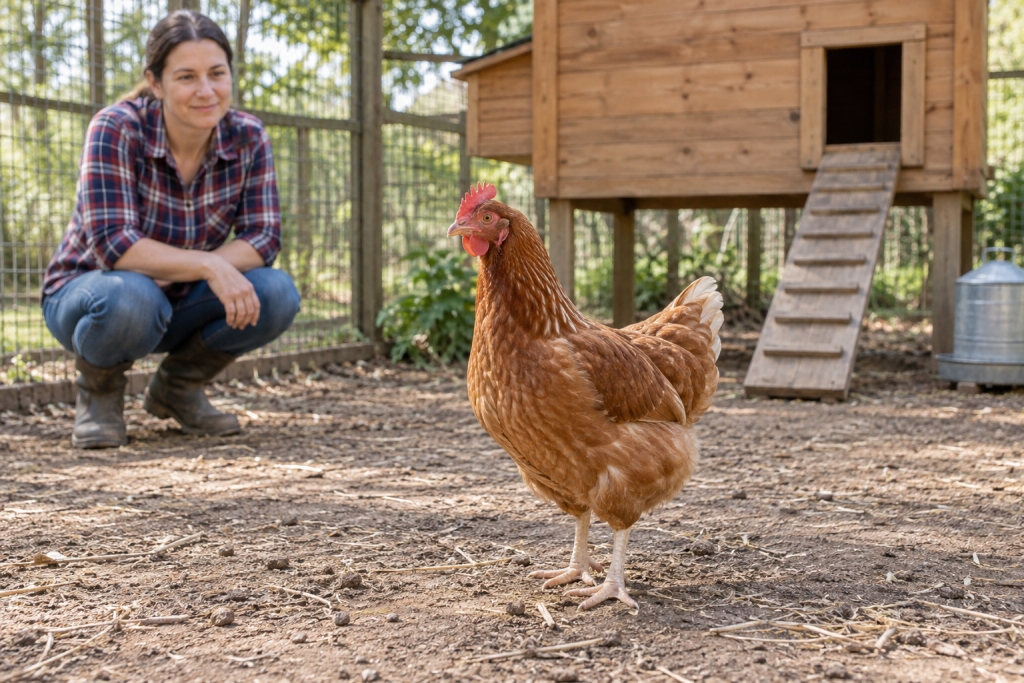
Chicken wound care starts with the bird, not the wound: control active bleeding with gentle direct pressure, stabilize the chicken, separate her from pecking flockmates, and decide whether the injury needs immediate veterinary care. Once the bird is stable, a minor superficial wound can be gently flushed, protected from contamination, and monitored closely. Deep, gaping, puncture, bite, eye, chest, abdominal, joint, or heavily contaminated wounds need professional evaluation.
This guide covers safe first-response steps for backyard keepers. It does not replace diagnosis, pain control, antibiotics, suturing, or other veterinary treatment. For the complete emergency sequence, begin with our cornerstone Chicken First Aid: Emergency Guide for Sick or Injured Hens.
First Decide: Emergency or Minor Wound?
Feathers can hide the source of blood, and a small visible opening can conceal deeper injury. Observe breathing, alertness, posture, balance, and the amount of active bleeding before focusing on cleaning. A chicken that is weak, cold, collapsing, open-mouth breathing, unable to stand, or continuing to bleed needs urgent veterinary guidance.
| Situation | Best response |
|---|---|
| Small superficial scrape; bleeding stopped; bird alert and standing | Isolate, gently clean, protect, and monitor closely |
| Bleeding does not stop with steady direct pressure | Emergency veterinary care |
| Deep, gaping, crushed, puncture, bite, or contaminated wound | Prompt veterinary examination |
| Eye, mouth, vent, chest, abdomen, joint, or exposed bone/tendon involved | Urgent veterinary examination |
| Weakness, pale comb, breathing difficulty, collapse, neurologic signs, or shock | Stabilize and transport immediately |
| Several birds injured or unexplained illness/deaths accompany wounds | Contact a veterinarian or animal-health authority |
Merck Veterinary Manual identifies ongoing bleeding, profound weakness, breathing trouble, and deep or large wounds as emergencies. Dog and cat bites deserve prompt veterinary attention even when the skin opening looks small because crushing injury and bacteria may extend beneath the surface.
Prepare Before You Pick Up the Chicken
Gather supplies first so restraint is brief. Work in a quiet, well-lit animal-care area away from the flock and household food surfaces. Wear disposable gloves, have a clean towel ready, and place an open carrier or hospital pen nearby. If the bird is mobile, wait until she is calm or use low light rather than chasing her around the run.
- Disposable gloves and a clean restraining towel
- Sterile gauze and nonstick wound pads
- Commercial sterile saline or veterinarian-approved wound rinse
- Clean scissors for mature body feathers only
- A small flashlight and phone camera for documentation
- Self-cling wrap and roll gauze only if you know the correct technique
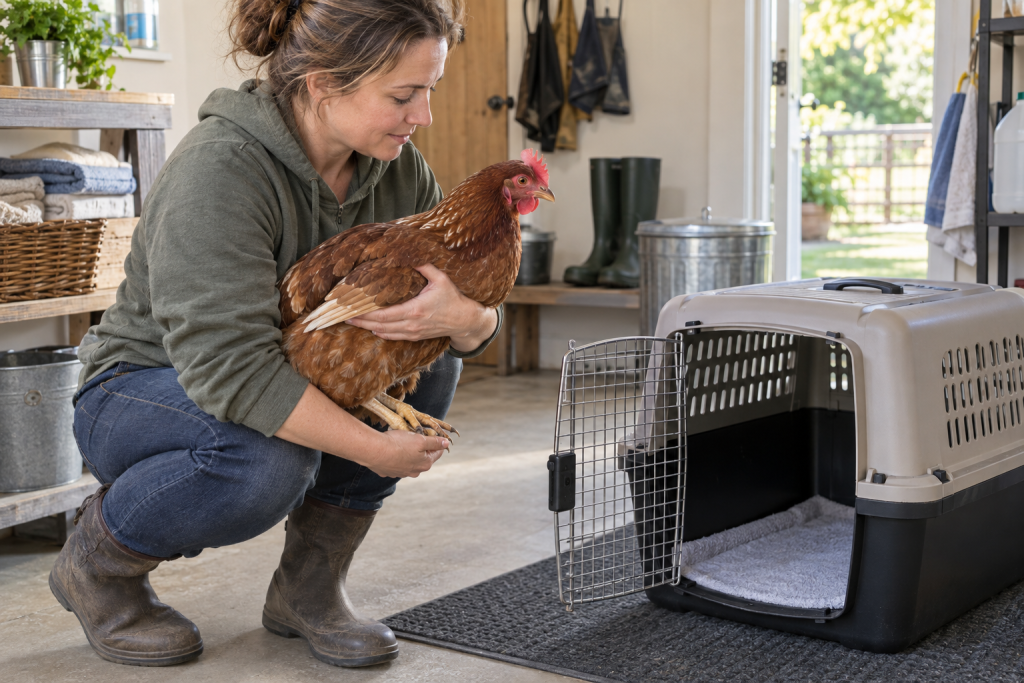
- A ventilated carrier for veterinary transport
- A prepared low, quiet recovery enclosure
The My Favorite Chicken Poultry First Aid Kit keeps common cleaning, dressing, and protective supplies together. Inspect and restock it before an emergency; do not assume every item is appropriate for every body location or injury.

Handle Without Restricting Breathing
Approach slowly, contain both wings against the body, and support the feet and body weight. Never squeeze the chest; birds must move the breastbone to breathe. A towel may reduce flapping, but keep the head uncovered and stop if breathing becomes labored. Our upcoming guide to catching, restraining, and transporting an injured chicken explains this process in detail.
If the bird becomes weak or distressed, return her to a secure carrier and contact the veterinarian. A perfect view of the wound is less important than maintaining breathing and minimizing stress.
Step 1: Control Active Bleeding
Place sterile gauze over the source and apply gentle, continuous direct pressure. Hold it in place rather than repeatedly lifting it to check; removing the pad can disturb the forming clot. If blood soaks through, add clean gauze on top while maintaining pressure. Do not scrub an actively bleeding wound.
- Do not use a tourniquet unless a veterinarian directs you.
- Do not pack deep wounds with powder, flour, cornstarch, or loose material.
- Do not pull at clots or dried blood after bleeding stops.
- Do not use styptic powder inside an open wound. Products labeled for minor nail, beak, or feather bleeding are not substitutes for pressure or veterinary care.
- If steady pressure does not stop the bleeding, transport the bird urgently.
Broken blood feathers can bleed from the shaft. Do not cut a developing feather that still contains blood, and do not attempt removal unless you have been shown the correct technique. Our guide to pin feathers and broken blood feathers explains why these injuries require special care.
Step 2: Expose and Assess the Area
After bleeding is controlled and the chicken is stable, part the feathers gently. Blood spread through feathers often makes an injury appear larger, while feathers can also hide a puncture or torn skin. Photograph the area before and after cleaning with a familiar object nearby for scale, without delaying urgent care.
Mature body feathers immediately around a superficial wound may be carefully trimmed when they prevent inspection or repeatedly stick to the site. Point scissors away from the skin and avoid wing and tail feathers, developing pin feathers, and any feather with a visible blood-filled shaft. Never pull tissue, probe a puncture, or cut away damaged skin yourself.
Step 3: Flush—Do Not Scrub
For a stable bird with a minor superficial wound, use sterile saline or a veterinarian-approved wound rinse to wash away surface dirt and dried material. Let the liquid flow across and away from the injury into an absorbent pad. Gentle irrigation is different from forcefully spraying tissue or pushing debris deeper.
- Use clean solution and clean gauze for each pass.
- Keep rinse out of the eyes, nostrils, mouth, ear openings, and respiratory tract unless a veterinarian gives specific instructions.
- Do not scrub healing tissue with cotton, brushes, or rough fabric.
- Do not pour hydrogen peroxide, rubbing alcohol, bleach, household disinfectant, essential oils, or concentrated iodine/chlorhexidine into the wound.
- Do not soak the whole bird; chilling and stress can worsen the situation.

Penn State Extension recommends cleaning poultry wounds and notes that large wounds may need sutures. If you use an antiseptic, choose one specifically appropriate for birds and the body location, and follow veterinary or label dilution directions. The Vetericyn Plus antimicrobial wound and skin-care spray can be a convenient labeled option for superficial skin care; it does not replace examination of bites, punctures, deep wounds, infection, or systemic illness.
Step 4: Protect the Wound and the Bird
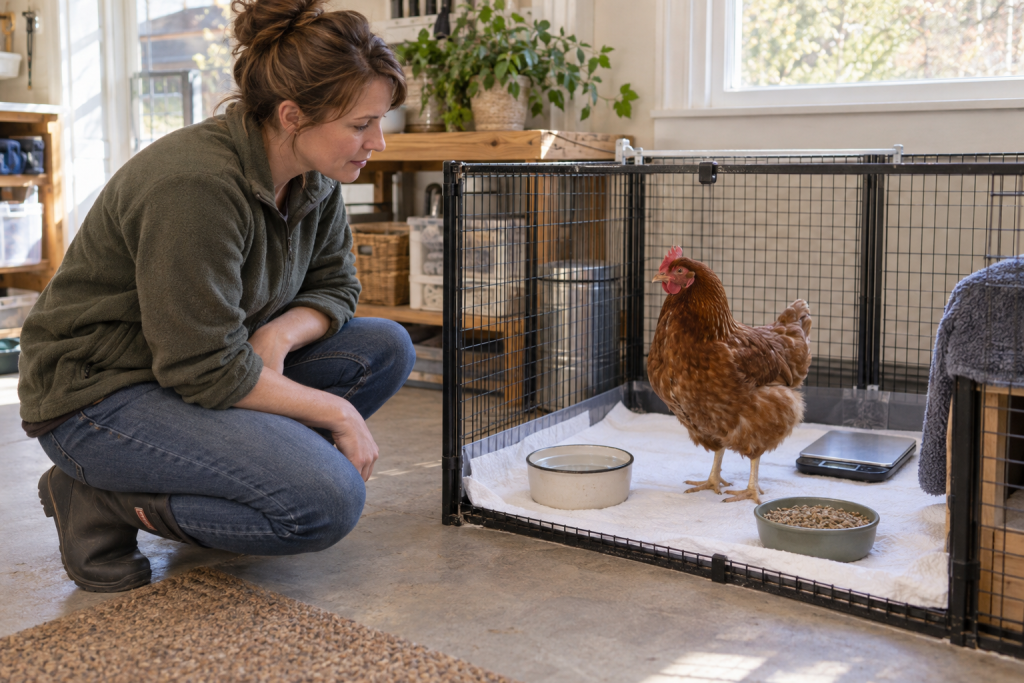
Move the chicken into a clean sick-chicken hospital pen after initial care. Blood, exposed skin, and abnormal behavior can attract pecking. Use a flat nonslip liner that can be changed frequently, keep food and water stable, and remove perches if jumping could reopen the injury.
Not every wound needs a home-applied bandage. Incorrect wraps can slip, constrict circulation, trap contamination, restrict breathing, or cause pressure injury. Body, wing, joint, foot, and leg bandages require different techniques. Ask a veterinarian to demonstrate the correct dressing and change interval for the specific injury. Never wrap around the chest tightly.
- Keep the enclosure dry and free of flies, dust, and loose bedding that can stick to tissue.
- Use a nonstick contact layer only when advised; ordinary gauze can adhere to a wound.
- Check toes and exposed skin below any limb wrap for temperature, color, and swelling.
- Remove or replace a wet, dirty, slipping, chewed, or foul-smelling dressing according to veterinary instructions.
- Prevent the chicken from pecking the site without using an improvised device that impairs eating, drinking, or breathing.

Step 5: Monitor the Whole Chicken
Inspect the bird at consistent times and keep written notes. A wound can look cleaner while the chicken’s overall condition worsens. Record alertness, posture, breathing, walking, appetite, water intake, droppings, weight when practical, and changes in the injury. The guidance in checking chicken weight and body condition can help you establish an objective trend.
| Monitor | Concerning change |
|---|---|
| Bleeding | Restarts, seeps through dressing, or appears elsewhere |
| Edges and surrounding skin | Increasing gap, swelling, heat, redness, dark tissue, or spreading discoloration |
| Discharge and odor | Thick material, persistent wetness, or foul smell |
| Behavior | Less alert, hides, resists standing, or stops normal preening |
| Breathing | Open-mouth breathing, tail bobbing, wheezing, or increased effort |
| Intake and output | Stops eating/drinking, vomits/regurgitates, or produces markedly abnormal droppings |
| Mobility | New limp, wing droop, loss of balance, or inability to bear weight |
Use our healthy and unhealthy chicken-droppings guide to interpret changes, and follow the upcoming Chicken Not Eating or Drinking guide if intake falls. Never force food or syringe liquid into a weak or breathing-compromised bird without veterinary instruction because aspiration can be fatal.

Signs of Infection or Complications
Contact a veterinarian when swelling, heat, pain, discharge, odor, dark tissue, a pocket under the skin, or worsening lameness develops. Poultry pus is often thick and caseous rather than freely draining, so waiting for liquid discharge can miss an infection. Antibiotics, pain medication, drainage, debridement, cultures, or closure are veterinary decisions—not reasons to use leftover medication.
Also seek help if the wound stops improving, reopens, attracts flies, contains maggots, or the bird’s appetite, weight, breathing, or energy declines. A localized injury does not explain sudden deaths, respiratory signs, neurologic signs, purple combs, or illness across several birds. The USDA advises reporting sudden or significant flock illness to a veterinarian, State animal-health official, or USDA at 1-866-536-7593.
Common Wound-Care Mistakes
- Treating the wound before stabilizing the bird: breathing difficulty, shock, and ongoing blood loss take priority.
- Repeatedly checking under the pressure pad: this can restart bleeding.
- Scrubbing or using harsh chemicals: healthy healing tissue is easily damaged.
- Assuming a bite is only a surface wound: punctures and crushing can be deeper than they appear.
- Using greasy ointment without guidance: products may contaminate feathers, trap debris, or contain ingredients unsuitable for birds.
- Wrapping too tightly: circulation, breathing, and tissue health can be compromised.
- Returning the bird while skin is visible: even curious pecks can reopen the site.
- Giving leftover antibiotics or pain medication: drug choice, dose, withdrawal time, and food-animal rules require veterinary direction.
- Ignoring the cause: the same exposed wire, predator gap, overcrowding, or aggressive flockmate can injure another bird.
Find and Correct the Cause
After the injured chicken is secure, inspect the coop and run in daylight. Look for protruding screws, broken wire, splintered nest-box edges, pinch points, sharp feeder parts, narrow openings, unstable roosts, slick ramps, and evidence of predator reach-through. Any ramp should have traction and terminate at a usable pop-door opening—not against a solid wall.
Review flock behavior as well. Overcrowding, too few feeders or waterers, rooster conflict, new-bird introductions, exposed skin, and nutritional imbalance can contribute to pecking. Our guide to introducing new chickens explains how rushed integration can increase conflict, while the backyard chicken biosecurity guide helps prevent equipment and footwear from spreading illness between the hospital pen and flock.

When Can the Chicken Return to the Flock?
Return should depend on healing, strength, and flock behavior—not a fixed number of days. The chicken should be alert, eating and drinking normally, moving safely, and able to avoid flockmates. The wound should be closed or well protected, dry, free of active bleeding or discharge, and unlikely to attract pecking. Complete prescribed treatment and follow veterinary restrictions.
Begin with visual contact through a secure barrier when practical, then supervise short interactions. Remove the bird if flockmates focus on the injury or she cannot move away. After a longer separation, use the same gradual approach described for flock introductions rather than placing her on the roost and assuming acceptance.
Chicken Wound-Care Checklist
- Assess breathing, alertness, posture, and blood loss.
- Call a veterinarian for emergencies, bites, punctures, deep wounds, or uncertain severity.
- Use steady direct pressure for active bleeding.
- Handle calmly without compressing the chest.
- Flush minor superficial wounds gently; do not scrub.
- Use only bird-appropriate products as labeled or directed.
- Separate the bird in a clean, dry, low hospital pen.
- Do not improvise a tight or complex bandage.
- Record wound appearance, behavior, intake, droppings, and weight.
- Correct the coop, predator, or flock-management cause before return.
Frequently Asked Questions
Can I use hydrogen peroxide on a chicken wound?
Do not routinely pour hydrogen peroxide into a wound. It can damage healing tissue. Sterile saline or a bird-appropriate wound rinse is a gentler first choice for superficial cleaning, with veterinary direction for antiseptics.
Should every chicken wound be bandaged?
No. Location, depth, contamination, and the bird’s behavior determine whether a dressing helps. Incorrect bandaging can constrict circulation, restrict breathing, or trap moisture. Ask a veterinarian to demonstrate the correct technique.
Can a chicken stay with the flock while healing?
Usually not when blood, exposed skin, weakness, or a visible dressing attracts attention. Separate the bird where she can rest and be monitored. Return only when the injury is protected and supervised interactions show no pecking interest.
How often should I clean the wound?
Follow the veterinarian’s plan and product label. Repeated unnecessary cleaning can disrupt new tissue. Check the bird and enclosure frequently, but do not keep reopening, scrubbing, or soaking a wound that is healing normally.
What if I cannot find a poultry veterinarian?
Call local avian, exotic-animal, mixed-animal, farm-animal, or emergency practices and ask whether they see chickens. Your state veterinary diagnostic laboratory, cooperative extension office, or State Veterinarian may also help identify poultry resources. Call before traveling so the clinic can prepare appropriate isolation.
Bottom line: stop bleeding, stabilize first, flush rather than scrub, isolate from pecking, and monitor the entire chicken—not just the wound. When an injury is deep, contaminated, caused by a bite, or paired with weakness or breathing trouble, prompt veterinary care gives the bird the best chance of recovery.