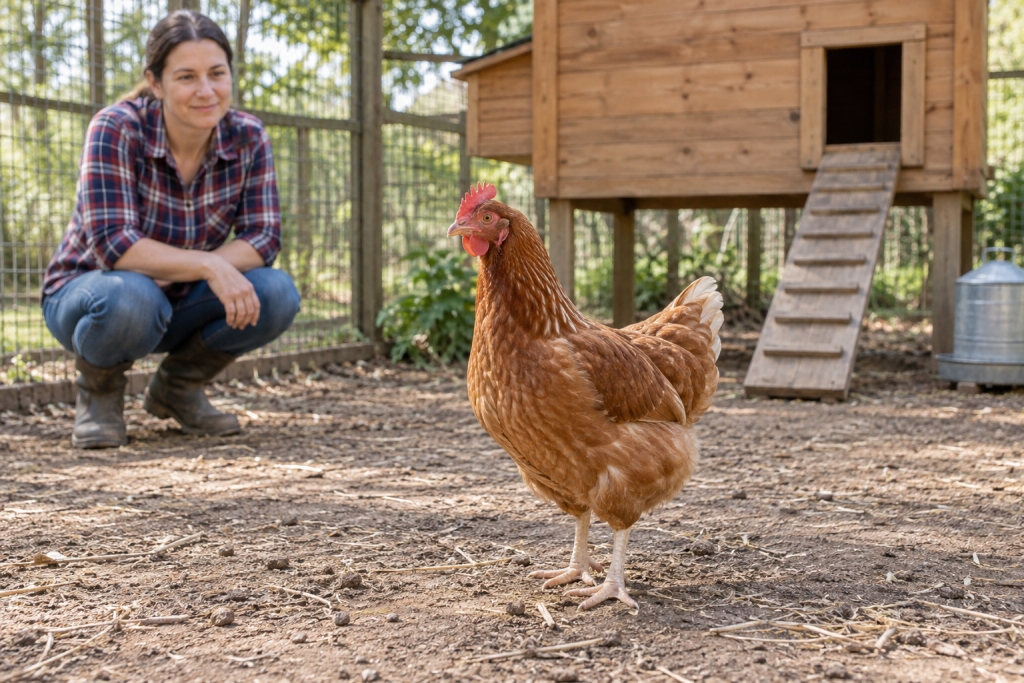
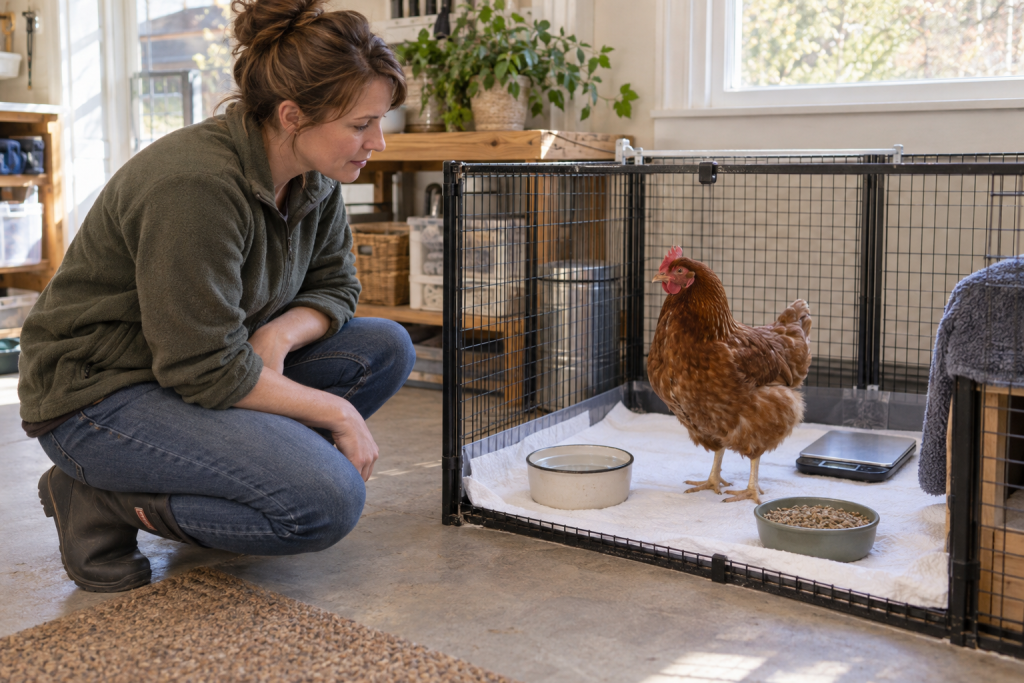
A sick chicken hospital pen should be secure, quiet, well ventilated, easy to clean, and just large enough for the bird to stand, turn, eat, drink, and rest without climbing or jumping. Use stable low dishes, nonslip flooring, no high roost, and dedicated equipment. Observe the chicken frequently, but keep handling brief. A hospital pen supports monitoring and protection; it does not diagnose illness or replace veterinary care.
Before moving the bird, check for emergency signs. Severe breathing difficulty, uncontrolled bleeding, collapse, seizures, head trauma, an open fracture, or profound weakness require immediate professional guidance. Start with our cornerstone Chicken First Aid emergency guide for the initial response and triage sequence.
When Does a Chicken Need a Hospital Pen?
Temporary separation is useful when a chicken needs protection, restricted activity, close observation, or reduced contact with flockmates. Common reasons include an injury that attracts pecking, lameness, recovery after veterinary treatment, an uncertain appetite, abnormal droppings, or possible contagious illness.
- Protect from pecking: Separate a bird with blood, exposed skin, weakness, or a wound that flockmates investigate.
- Restrict activity: A low enclosure can prevent jumping while a foot, leg, or wing concern is assessed.
- Measure intake: Individual housing makes it easier to see whether the bird is actually eating and drinking.
- Inspect droppings: A clean liner reveals frequency, color, consistency, blood, worms, or undigested material.
- Limit disease spread: Separation plus dedicated tools and careful traffic flow can reduce direct exposure while you seek a diagnosis.
If you are unsure whether the bird is ill, compare her behavior, breathing, posture, appetite, comb, eyes, vent, legs, and droppings with the warning signs in How to Tell if a Chicken Is Sick.
Hospital Pen vs. Quarantine
| Setup | Main purpose | Typical situation |
|---|---|---|
| Hospital pen | Short-term protection, observation, restricted activity, or recovery | One current flock member is sick or injured |
| Medical isolation | Reduce contact while contagious disease is suspected or confirmed | Respiratory, neurologic, digestive, or flock-wide warning signs |
| New-bird quarantine | Prevent an apparently healthy newcomer from introducing disease | Newly purchased, adopted, or returning birds |
The CDC recommends keeping new poultry separated for at least 30 days and using separate gloves, clothing, footwear, and equipment between groups. That new-bird quarantine period is different from the length of a hospital stay, which depends on diagnosis, recovery, and veterinary instructions.
Choose the Hospital-Pen Location
Select a protected animal-care space that is quiet, ventilated, predator-proof, and easy to clean. A dedicated utility shed, enclosed porch used only for animal care, garage area separated from food and living space, or a protected section of an outbuilding can work when temperature and airflow are suitable.
- Keep the pen away from kitchens, dining areas, bedrooms, and places where food is prepared or stored.
- Avoid direct sun, drafts, smoke, aerosol sprays, ammonia, dusty feed, and strong fragrances.
- Protect the enclosure from dogs, cats, rodents, children, and curious flockmates.
- Leave enough room around the enclosure to inspect, feed, clean, and move the bird without crowding.
- Choose a route that does not require carrying contaminated bowls or bedding through the home.
- If contagious illness is possible, maximize distance from the healthy flock and follow veterinary or animal-health instructions.
The CDC advises cleaning poultry cages and equipment outdoors rather than in household sinks or food areas. Its process begins by removing manure and other organic debris, then applying a correctly diluted, poultry-area-appropriate disinfectant for the label contact time, rinsing when required, and allowing the surface to dry.
Choose the Right Enclosure
A wire dog crate, secure exercise pen with a covered top, or other easily disinfected enclosure may serve as a hospital pen. The sides must contain the chicken safely without trapping her head, wings, toes, or bandaging. Covering part of the exterior with a breathable towel can reduce visual stimulation, but never block ventilation or allow fabric to hang within pecking reach.
- The chicken should be able to stand normally, turn, and lie down.
- The enclosure should not be so large that a weak or injured bird must travel far to reach food and water.
- Remove high roosts, swings, steps, and unstable objects.
- Use secure latches and verify there are no sharp wire ends or pinch points.
- Keep doors large enough for calm two-handed handling rather than pulling the bird through a narrow opening.
- For a leg or balance problem, keep the layout low and simple so falling is impossible.

Use Nonslip, Observable Flooring
The best initial floor is flat, nonslip, absorbent, and easy to replace. White paper towels over a nonslip base can help reveal blood, abnormal droppings, parasites, or changes in output. A washable rubber-backed mat or tightly fitted towel may provide traction, but loose loops, frayed edges, and wrinkles can catch nails or make walking harder.
Loose bedding can be introduced later when it suits the bird’s condition and does not contaminate a wound or hide droppings. If hemp bedding is used during a longer recovery, keep it dry and inspect it frequently; follow the same moisture principles described in Is Hemp Bedding Safe for Chickens?. Do not continually cover wet material with a fresh layer. Remove the wet section and correct the spill or leak, as outlined in our wet chicken-coop bedding guide.
Place Food and Water Within Easy Reach
Use the bird’s familiar complete feed unless a veterinarian recommends a different diet. Stable, shallow dishes should be close enough that the chicken does not need to climb or cross the enclosure repeatedly. Mount or brace them so they cannot tip, soak the floor, or become buried in bedding.
- Measure or photograph the starting food and water level when intake is uncertain.
- Replace contaminated water and remove wet feed promptly.
- Watch the bird swallow before assuming she can safely drink.
- Do not dilute complete feed with large amounts of treats to tempt appetite.
- Do not force-feed or syringe liquids into a weak, neurologic, or breathing-compromised chicken without veterinary instruction.
Loss of appetite is a symptom with many possible causes. Use the upcoming Chicken Not Eating or Drinking decision guide rather than automatically reaching for supplements.
Ventilation, Temperature, and Light
Fresh air matters even in a small temporary enclosure. The pen should not smell of ammonia or feel humid, stuffy, or dusty. At the same time, do not place a weak bird in a direct fan stream or cold draft. Our chicken-coop ventilation guide explains the difference between continuous air exchange and concentrated airflow across the bird.
Do not assume every sick chicken needs added heat. Fever, heat stress, respiratory disease, injury, and cold stress require different management. Use supplemental heat only when it is appropriate to the condition and can be installed safely. Never hang a heat lamp over a crate, drape fabric over a heater, or place electrical cords where the bird, water, or bedding can reach them. Maintain a normal day-night cycle and provide uninterrupted darkness for rest.
Prevent Cross-Contamination
Treat the hospital pen as its own care zone until the cause is known. Penn State Extension recommends caring for sick pens last or assigning a separate caretaker. This prevents hands, clothing, footwear, bowls, and tools from carrying material back to healthy birds.
- Feed and check the healthy flock first, then visit the hospital pen.
- Use dedicated gloves, footwear, bowls, cleaning tools, and waste bags.
- Remove visible dirt before disinfecting; organic material can prevent disinfectants from working correctly.
- Follow the disinfectant label for dilution, surface compatibility, contact time, rinsing, and drying.
- Wash hands with soap and running water after handling the bird or enclosure.
- Do not carry used bedding, dishes, or towels through food-preparation areas.
- Record everyone who handled the bird and any equipment shared before separation.

For a complete traffic-flow and sanitation plan, use our backyard chicken biosecurity guide. If multiple birds develop respiratory, digestive, neurologic, or sudden-death signs, contact a veterinarian and animal-health officials rather than simply adding more hospital crates.
Monitor the Chicken on a Schedule
Keep a simple written record. Trends are more valuable than vague impressions, and the information can help a veterinarian decide what to test or examine.
| Check | What to record |
|---|---|
| Behavior | Alertness, posture, response to surroundings, sleep, and vocalization |
| Breathing | Beak open or closed, tail bobbing, sounds, discharge, and effort |
| Food and water | Observed eating or drinking, approximate amount used, and swallowing difficulty |
| Droppings | Number, color, consistency, blood, mucus, worms, or undigested material |
| Mobility | Standing, walking, weight bearing, balance, and wing position |
| Body condition | Weight when safe to measure and breast-muscle change around the keel |
| Specific concern | Wound appearance, swelling, laying behavior, crop change, or treatment directed by the veterinarian |

Take photographs from the same angle and distance when tracking a visible wound or swelling. Use our guide to checking chicken weight and body condition for a repeatable weighing method, and compare droppings with healthy and abnormal chicken poop.
Transport Is Different From Hospital Housing
A compact carrier helps limit movement during a trip to the veterinarian, but it is not usually suitable as an all-day or multi-day hospital pen. For transport, use a nonslip absorbent liner, keep ventilation panels open, secure the carrier level in the vehicle, and remove loose bowls or objects that could strike the bird.
The My Favorite Chicken poultry carrier provides a foldable, ventilated option for short supervised transport. Measure the bird and follow the product instructions; do not overcrowd the carrier or use it as a substitute for a larger recovery enclosure. See our upcoming guide to catching, restraining, and transporting an injured chicken before the trip.

Hospital-Pen Supplies to Keep Ready
- Secure cleanable enclosure and spare latch or clips
- Nonslip mat and replaceable white paper towels
- Stable low food and water dishes
- Dedicated scoop, brush, waste bags, gloves, and footwear
- Digital scale suitable for a carrier or crate
- Notebook, pen, phone charger, and emergency contact list
- Clean towels for controlled handling or carrier lining
- Condition-appropriate supplies directed by the veterinarian
A prepared My Favorite Chicken poultry first aid kit keeps basic wound-care, bandaging, protective, and supportive-care supplies together. Its contents still must be used according to each current label and the bird’s actual condition. Review what belongs in a chicken first aid kit before an emergency.
Common Hospital-Pen Mistakes
- Using a slippery plastic floor with no traction
- Adding a high perch to an enclosure for a weak or lame bird
- Placing deep open water beside a bird that cannot stand steadily
- Assuming an enclosed, warm-looking crate has enough ventilation
- Using a heat lamp or unprotected electrical cord near towels and bedding
- Housing the bird in a kitchen, bedroom, or family living area
- Returning bowls or tools to the healthy flock without cleaning and disinfection
- Changing several foods, supplements, or treatments at once
- Leaving the bird isolated without scheduled checks
- Keeping a declining chicken in home care because the pen appears comfortable
When to Call a Veterinarian or Report Illness
Contact a poultry-capable veterinarian promptly for breathing difficulty, persistent bleeding, predator bites, deep wounds, abnormal neurologic signs, collapse, inability to stand, severe pain, a suspected fracture, prolapse, repeated straining, progressive swelling, or a bird that will not eat or drink. Call before transporting a bird with possible contagious disease.
USDA’s Defend the Flock guidance asks U.S. owners to report sick or dying birds, particularly sudden deaths, marked respiratory signs, swelling, purple discoloration, neurologic signs, watery green diarrhea, or abrupt production changes. Contact your State veterinarian or USDA at 1-866-536-7593 for current instructions.
Returning the Chicken to the Flock
Return depends on the diagnosis, disease risk, mobility, healing, appetite, and flock behavior. The chicken should be stable, able to reach food and water, and free of exposed blood or tissue that invites pecking. Complete any veterinary isolation period before contact.
When contagion is no longer a concern, a see-but-do-not-touch pen within or beside the run can allow supervised visual contact before full return. Reintroduce during a calm period, provide more than one food and water station, and watch for sustained chasing, cornering, pecking, or blocked access. Our guide to introducing chickens to an existing flock explains gradual reintroduction principles.
Frequently Asked Questions
Can I keep a sick chicken in the house?
A dedicated animal-care area separated from kitchens, food storage, bedrooms, children, and vulnerable household members is safer than a family living space. CDC guidance recommends keeping poultry and their equipment outside the home and cleaning supplies outdoors.
Should a sick chicken have a roost?
Usually not when the bird is weak, lame, unbalanced, or recovering from injury because even a low fall can worsen the problem. A steady bird may later use a very low stable perch if the veterinarian and condition allow it.
How long should a chicken remain separated?
There is no universal hospital-pen duration. Separation ends when the cause is understood, contagious risk is resolved, treatment or recovery criteria are met, and the bird can function safely with flockmates. New-bird quarantine is a separate process and generally lasts at least 30 days.
Will isolation make a chicken lonely?
Chickens are social, and unnecessary isolation can add stress. For a noncontagious injury, protected visual contact may help when it does not encourage pacing or agitation. Suspected contagious disease requires stronger separation even if the bird dislikes it.
The Bottom Line
A useful sick-chicken hospital pen is simple: safe enclosure, nonslip floor, easy food and water access, fresh air, a calm day-night cycle, dedicated equipment, and written monitoring. Adjust the setup to the diagnosis and mobility of the individual bird, and remember that comfort and cleanliness support recovery but do not replace veterinary evaluation.
Prepare the pen before an emergency, protect the rest of the flock through disciplined biosecurity, and escalate promptly whenever the chicken is unstable or worsening.